Regions Map
X
Miss Coco Flamenco
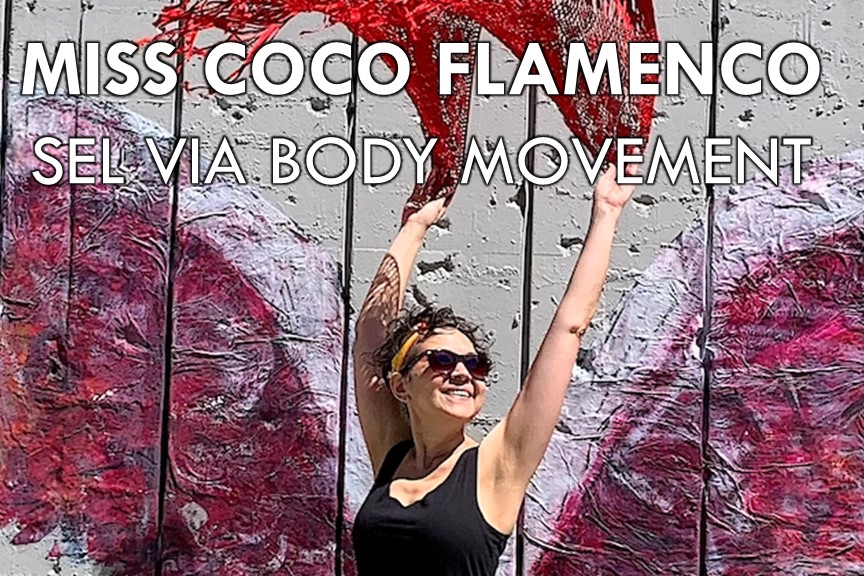
Like Spanish traditional Flamenco dancers and Flamenco guitarists did in the Middle Ages,, students move their bodies in fun, new ways to create triumph over any troubles. Miss Coco Flamenco’s fabulously funny flair for character education will have your students stomping out bullying “ultimate fast,” soaring with power and peace, making hilarious music together, grabbing their goals, and sharing each other’s creative awesomeness. All audience members are encouraged to get up and get moving to infectious dancing, hand claps, and Spanish guitar. All with a professor’s approach that’s so high-energy, even teachers and staff love to join in!
Sharing SEL Strategies through Simple Body Movement, Fun Rhythm, and Triumphant Dance
Social Awareness >> Stomping out bullying – Flamenco Feet (Taconeo)
Responsible Decision-Making >> Choose both power and peace – Flamenco Falcon and Dove Arms (Brazeo)
Relationship Skills >> Make music together – Flamenco-style Clapping (Palmas)
Self-Awareness >> Be self-confident and grab your goals – Flamenco Bullfighter Moves (Postura)
Self-Management >> Create beauty and share it with a neighbor – Flamenco Hands (Floreo)
Marcus Mohalland

The “Silly Nomads” book series is a five-volume collection of children’s literature that target children ages 7- 12. I drew heavily on my own vibrant childhood experiences while growing up on the island of Jamaica. These stories, immersed young readers in a world of imaginative adventures and cultural discovery. Each book within the series encourages creativity and exploration, fostering a love of reading while subtly reinforcing essential life lessons and positive character traits. Beyond the books themselves, I actively engage with students through interactive school readings, aiming to ignite a lifelong passion for literature.
The “Silly Nomads” offers a unique opportunity to introduce students to a different culture, enriching their understanding of the world and fostering empathy and appreciation for diverse perspectives. I look forward to sharing my childhood adventures with you and your students.
Jump Rope Masters

The Jump Rope Masters program is an engaging school assembly that incorporates rope skipping, unicycling, audience participation, a motivational message and glow-in-the-dark awesomeness! The show features 7-Time World Champion and 12-Time Guinness World Records holder, Peter Nestler. This program has been seen live by over a million students in all 50 states and 35+ countries. Our focus is on using a dynamic and exciting show to engage students' attention and then using that platform to help them learn the importance of making good choices to reach their potential. The program is adjusted based on the age group of the students in attendance and we have different messages available on anti-bullying, anti-drug, working hard and more! Contact us to find out more about the program that schools around the world are calling "bar none, the most entertaining assembly that I have ever seen!"
Taikoza
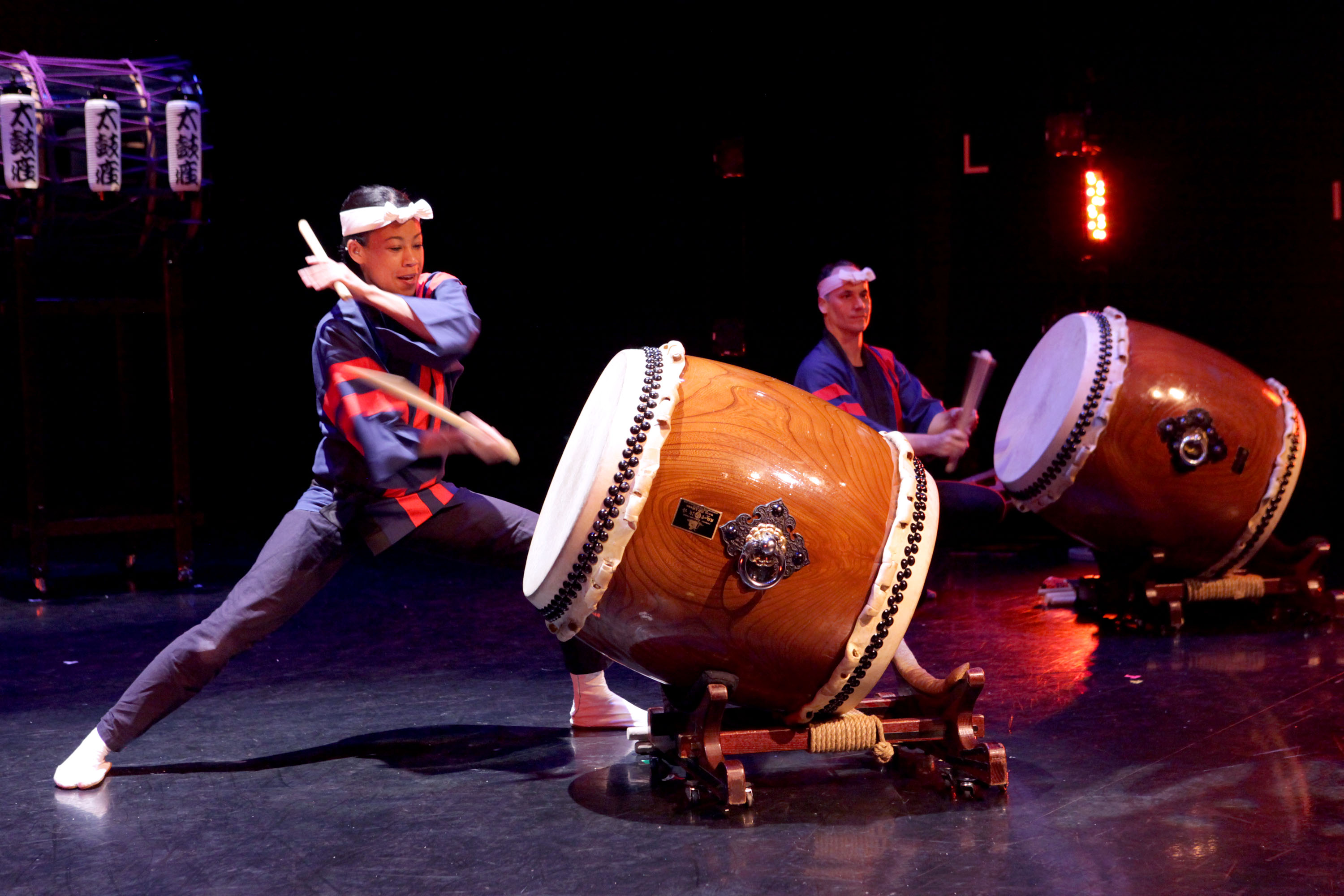
Taikoza is a Japanese Taiko drum group that uses the powerful rhythms of the Taiko drums to create an electrifying energy that carries audiences in a new dimension of excitement. The Taiko is a large, barrel-like drum that can fill the air with rolling thunder. Drawing from Japan's rich tradition of music and performance, Taikoza has created a new sound using a variety of traditional instruments. In addition, the Taiko Taikoza incorporates bamboo flutes. Taikoza has performed in Europe and Asia. Taikoza appeared on the History Channel and “The Last Samurai “DVD set. Taikoza presents a unique and exciting program using Japanese Taiko drums (weighing 200lb drums) and bamboo flutes. The program will take you on an unforgettable journey through Japan. It will take students to different areas and through the seasons of Japan.
Students will be experiencing a new culture in a fun and exciting way, they will get a chance to see and at times touch the ancestral drums. The taiko drum can touch everyone with its thunderous sounds and vibrations. Taikoza hopes to open the student’s eyes to the richness of Japanese culture and spark an interest. We hope that this will spark an interest in other world cultures. Taiko has been associated with many aspects of Japanese culture since ancient times. It is said that Taiko was used to drive away the plague and evil spirits. In the Shinto religion, it was used to call upon and entertain the gods, or kami, and in Japanese Buddhism, its sound was the manifestation of the voice of the Buddha.
Taikoza’s programs can be tailored to your school’s needs and interests. In a performance by Taikoza your students may experience:
They will hear and see taiko songs. Taiko is often compared to martial arts, as the drums are played very physically using sticks that resemble baseball bats.
They will hear songs played on the bamboo flutes.
Some will get to play on the drums and interact with the performers.
Adventures of Walter Educational Programs
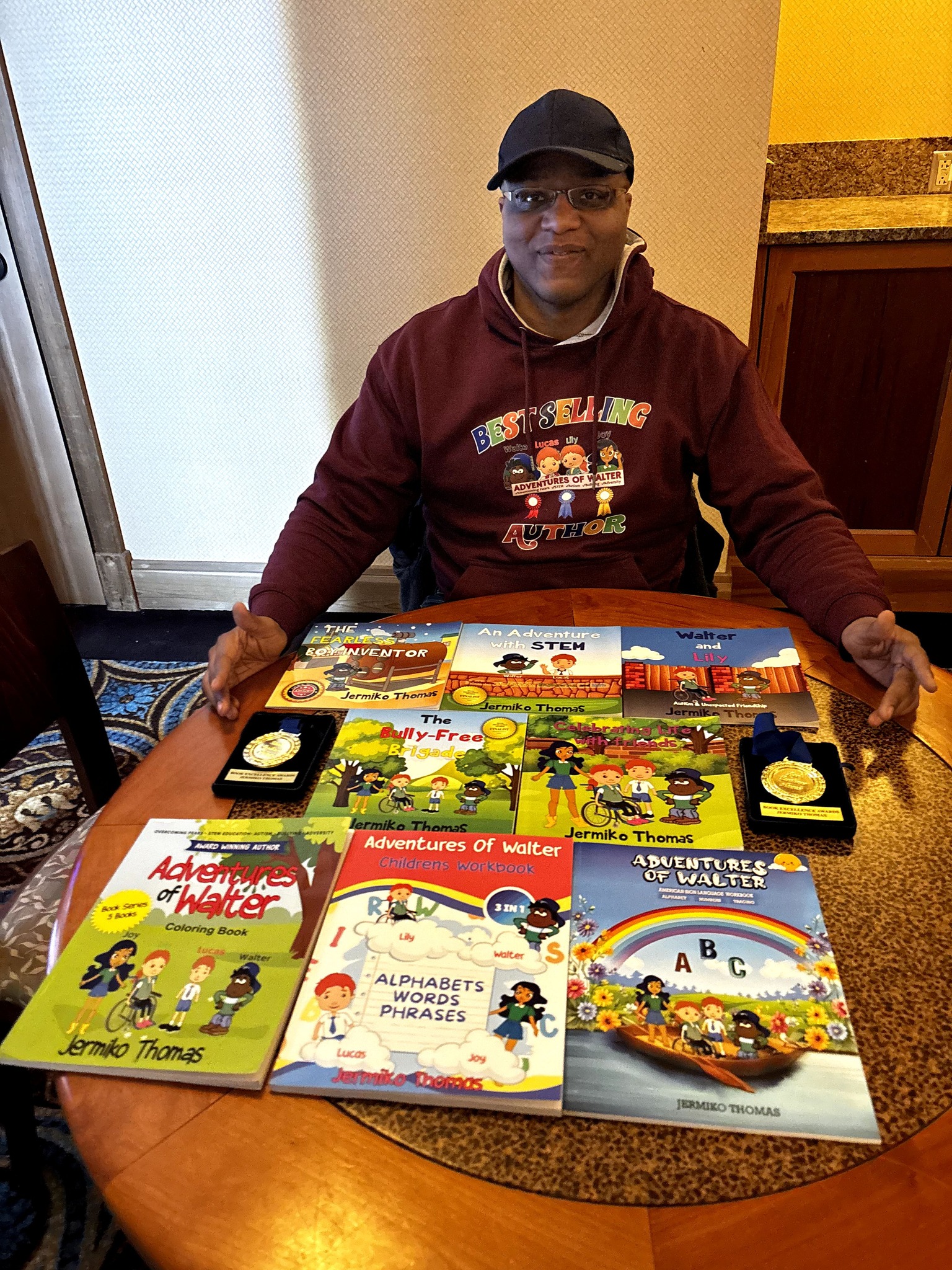
Educational Market Best-Selling Author and TEDx speaker Jermiko Thomas delivers engaging literacy and social-emotional learning programs through the Adventures of Walter series.
Programs support literacy development, STEM curiosity, SEL skills, bullying prevention, autism inclusion, and positive character development through interactive storytelling and classroom engagement.
The Adventures of Walter collection also includes student learning resources such as activity workbooks, coloring books, and an American Sign Language (ASL) Alphabet & Numbers workbook, helping reinforce literacy, creativity, and inclusive learning.
Jermiko’s programs are inspired by his personal journey — he did not speak until age six and first communicated through sign language, making his work especially meaningful for students with diverse learning and communication needs.
Programs are designed for elementary schools (Pre-K–5) and can be delivered as assemblies, classroom workshops, literacy events, STEM enrichment sessions, and special education programming.
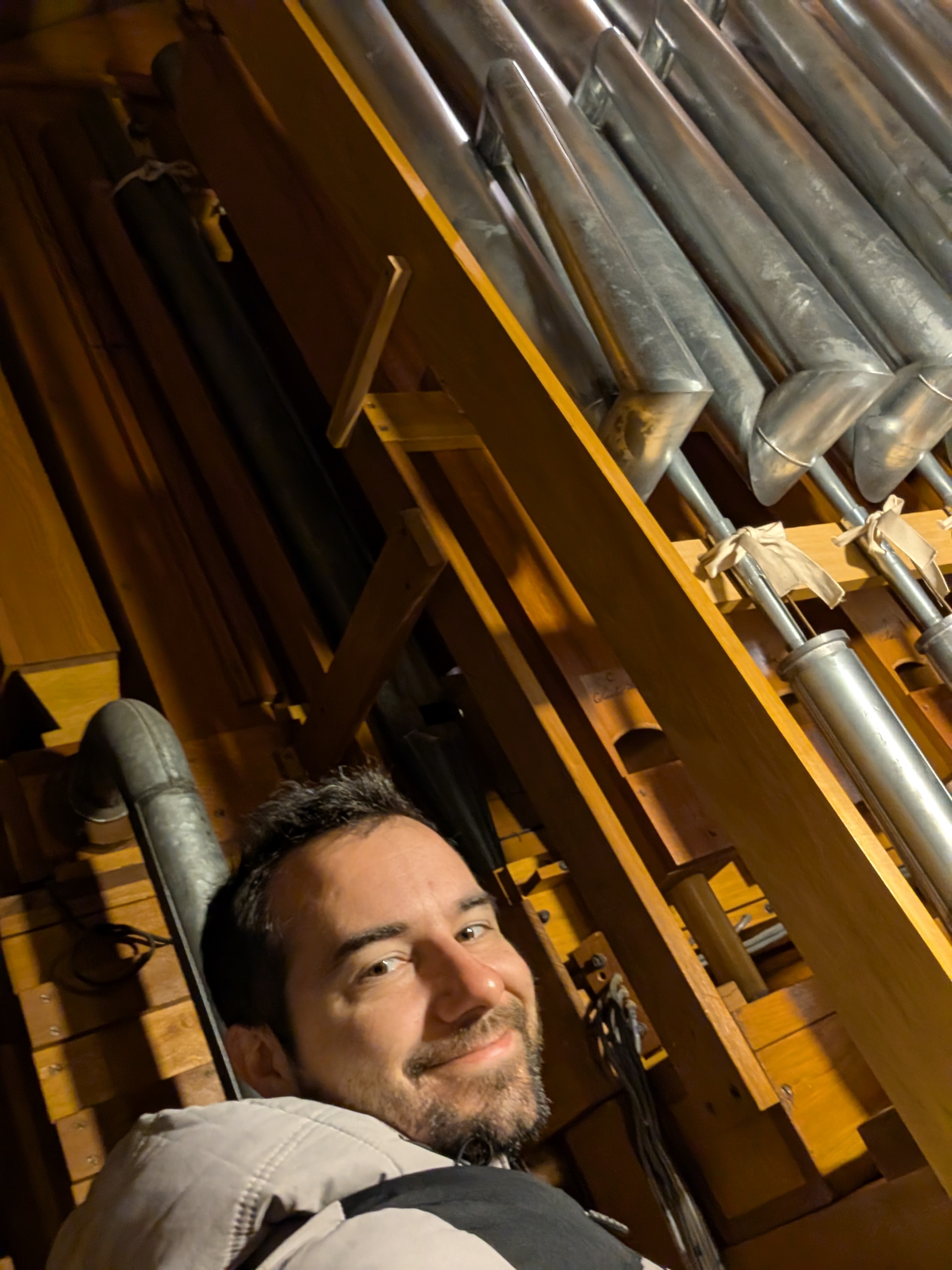
Ama Unicorn
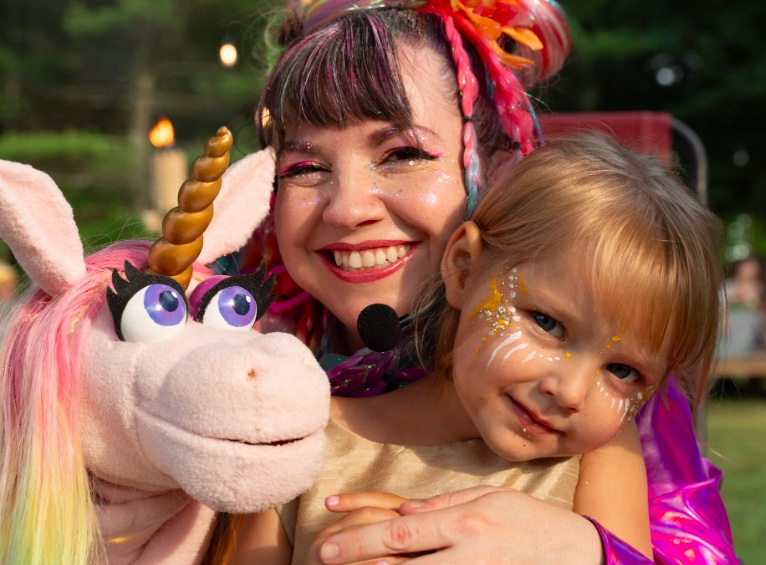
More than a show! A transformational experience! " AmagiNation with Ama Unicorn” is a high energy, interactive musical storytelling performance experience integrating tools for social emotional learning & mindfulness .Through live original music, storytelling, dance, movement, guided mindful moments, puppets and audience participation, children and care-givers are invited on an immersive, shared, unifying journey where they are invited to actively participate and practice powerful social-emotional and self-regulation tools in real time - connecting to the self, one another and the Earth.
This event blends theater, storytelling, music, mindfulness, movement, humor and creative play to support children’s emotional expression, imagination, and self connection. Through song, story, movement and meditation children are invited to explore feelings, build confidence, resilience, and transform challenging emotions and thoughts into creative expression in a safe, playful environment .
The program is designed as an educational, arts-based experience focused on emotional literacy and creativity — not therapy.
Children are guided first into their bodies and senses, then into imagination, story and dance and mindful participation followed by creative expression and sharing, and finally into gentle integration and closure.
Ama also offers professional development courses and one on one courses in the following to educators, facilitators, students and individuals of all ages:
Mindfulness, emotional regulation, emotional intelligence, confidence/ self esteem building, resilience, creative problem solving, stress reduction, meditation, comedy, storytelling, acting and songwriting and performance technique
Didgeridoo Down Under
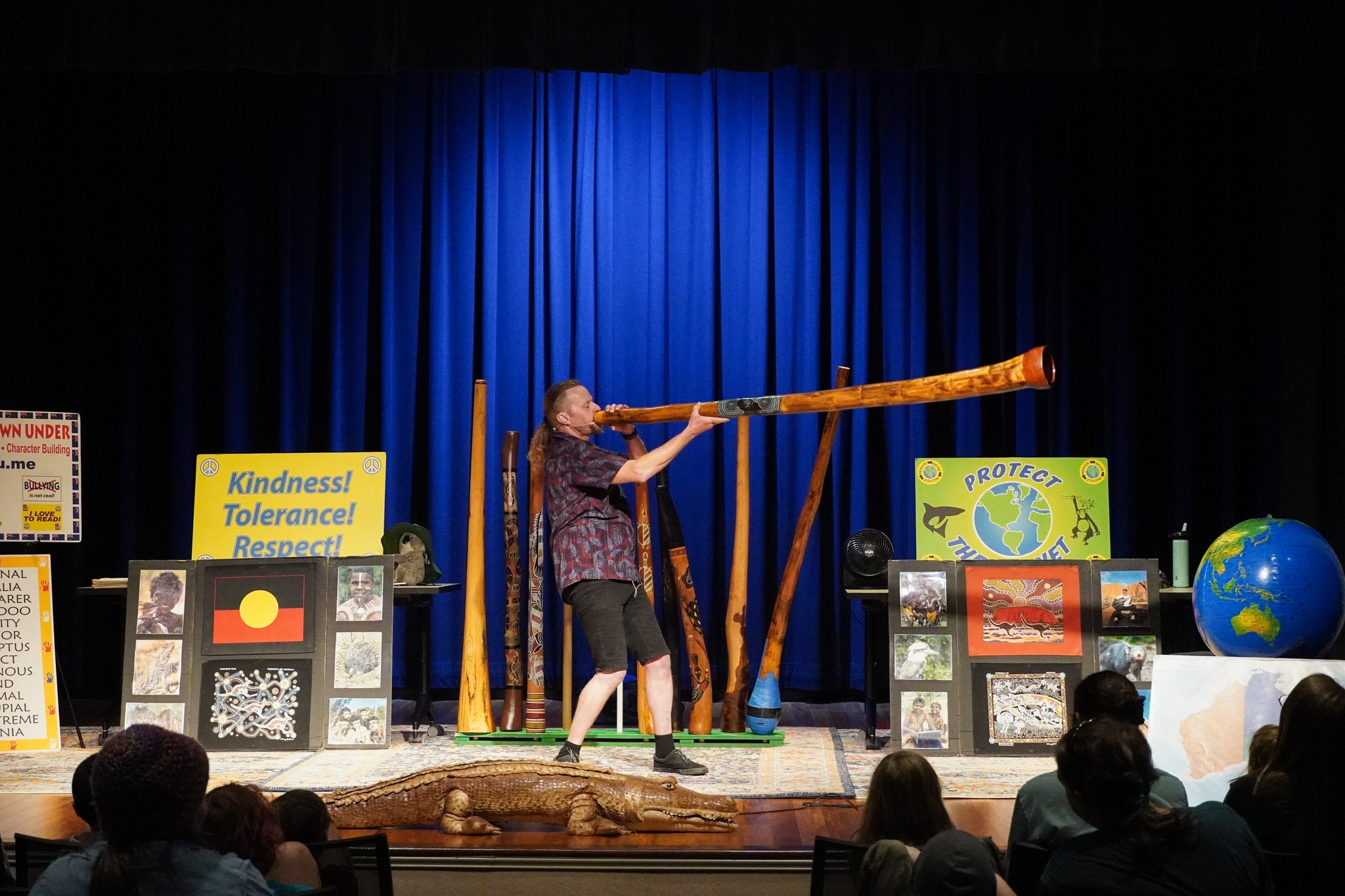
G’day! We weave Australian cultural arts, core curriculum, character building (kindness, acceptance, ant-bullying and more), motivational speaking and audience participation into super-engaging and interactive shows, workshops and residencies.
Since 2003, we've presented 10,000+ programs at schools and other venues nationwide … including all regions of New York ... with countless rave reviews!
Our K-12 programs include …
1) Didgeridoo Down Under Show: Australian Music, Culture, Character Building & More! (PreK-12th)
2) Protect the Planet Show: World Music, Earth Science and Ecological Entertainment! (K-9th)
3) Aussie Funk Jam: Didgeridoo Workshop! (2nd-12th)
4) Didgeridoo Residency: Multi-Day Immersive Didge Experience! (3rd-12th)
5) Adventures of the Wild Wolf: Unleash Your Inner Reader & Author! (K-5th) – virtual only
We adjust our programs according to grade levels and learning objectives.
Please visit www.didgedownunder.com for more info.
Our promotional videos are available at www.didgedownunder.com/gallery.
We’d love to visit your school during our next New York tour!
Page Turner Adventures
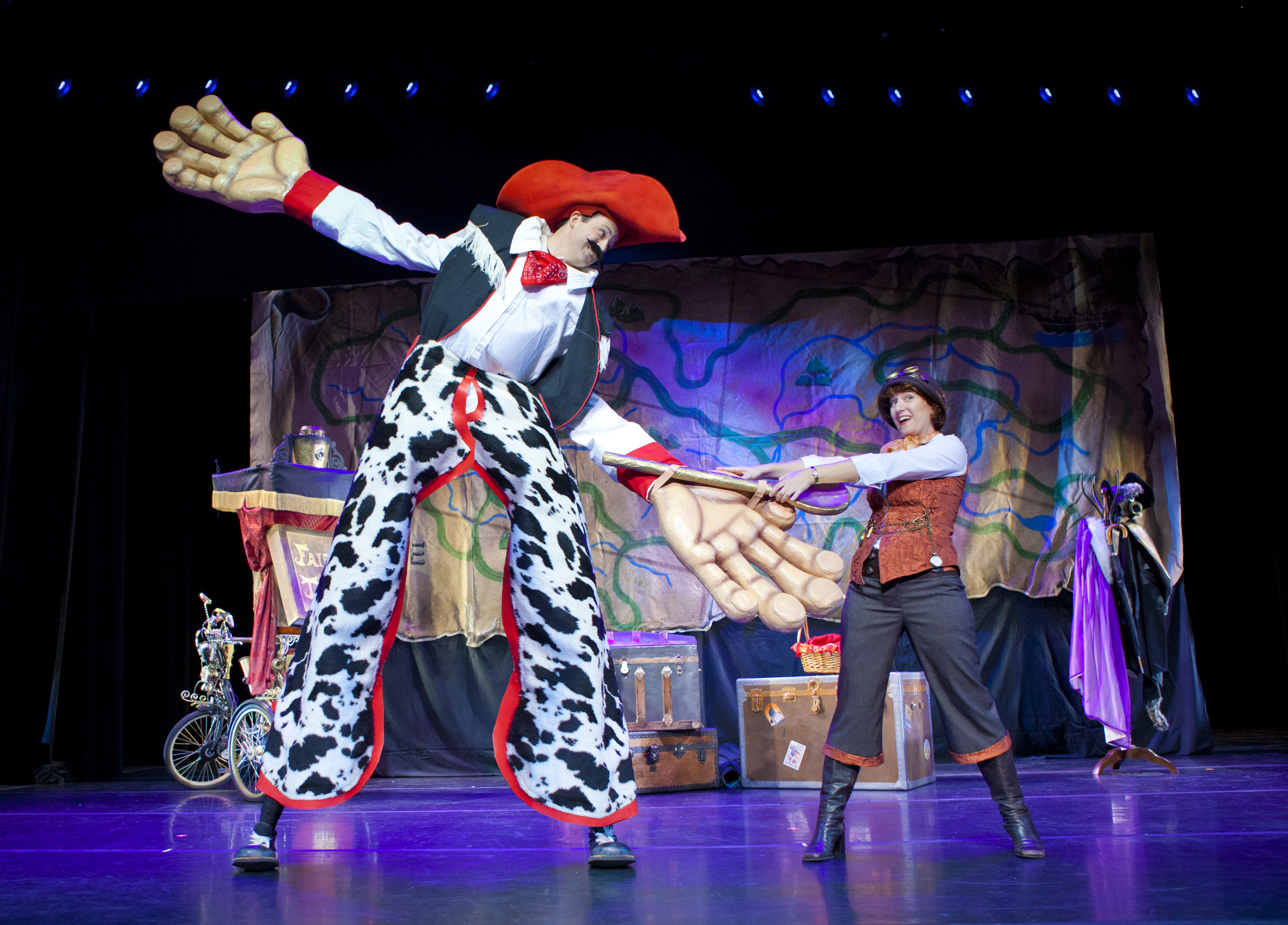
Page Turner Adventures’ Story-Powered shows are a unique blend of Immersive Theater, Circus, and non-stop Audience Participation that take a book from the PAGE TO STAGE! Every child in the audience becomes the hero of the story, making choices, solving problems, and impacting the outcome. It’s a visceral experience that turbo charges a passion for reading and writing that kids will never forget. PLUS…. Every teacher at the show gets a LITERACY WONDER BUNDLE link which includes an Ebook, Animated Video, Audiobook, Craft, Writing Guide, Reader’s Theater Script or PDF Puppet Kit all BASED ON THE SHOW the kids just saw! So the laughter and learning continue long after the curtain closes.
VRBuffalo
VRBuffalo is bringing spatial computing and immersive content creation to participants across WNY. By helping people have purposeful and thoughtful experiences with XR tech:
AR (Augmented Reality), MR (Mixed Reality), and VR (Virtual Reality) technologies.
Stomping Ground Camp, Inc.
Stomping Ground is an overnight camp in the gateway to the Adirondacks in Saratoga Springs, New York. We are building radically empathetic communities through humble curiosity, personal responsibility, restorative practices, and unbounded creativity. In the off season, we offer more focused programming around community building, conflict resolution training through circles, and practices focused in empathy and inclusion.
Our mission is to partner with young people to inspire the next generation of radically empathetic decision makers. Together we re-imagine a more perfect world.
Omegaman & Friends
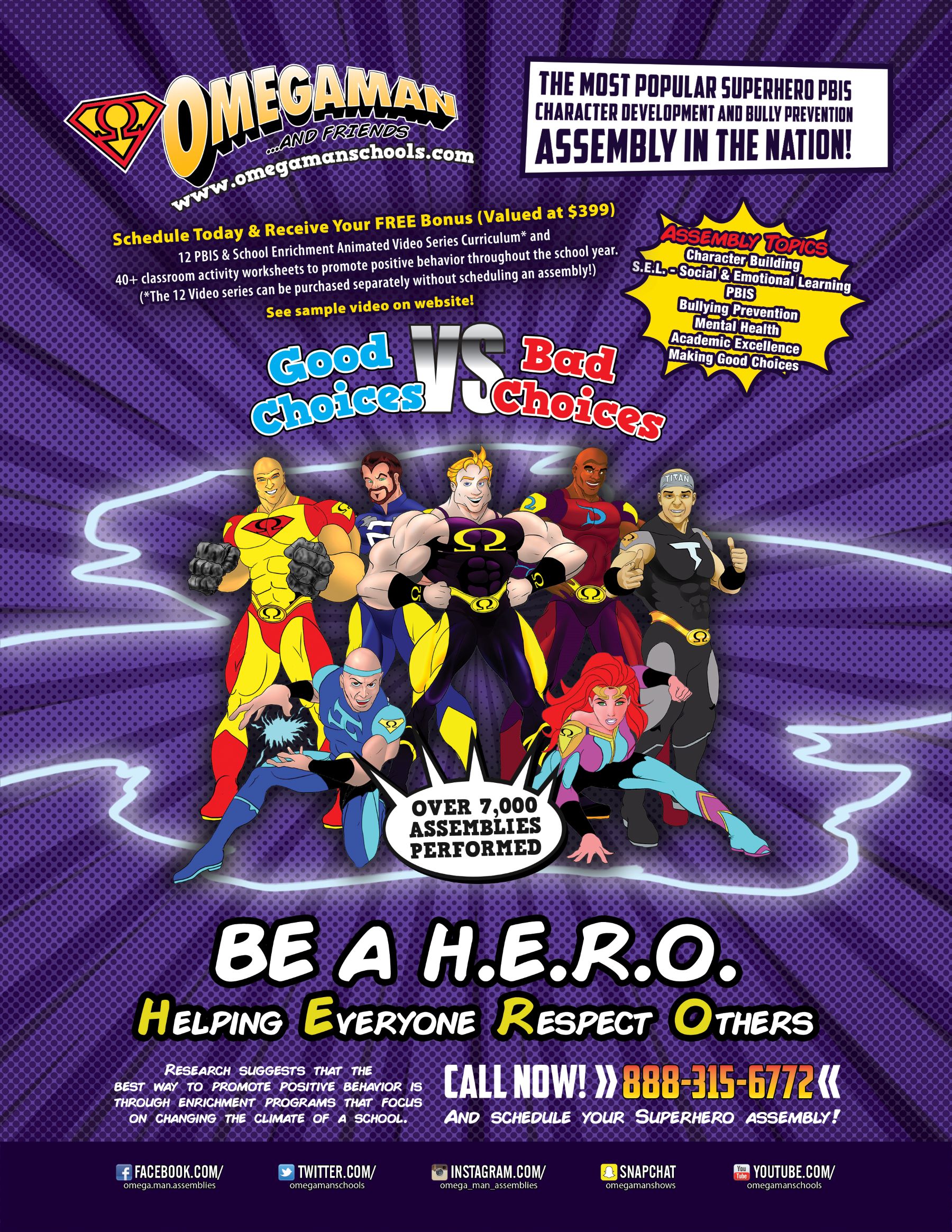
We are among America’s most sought-after school assembly speakers. The Omegaman & Friends presentation is a 45-60-minute interactive assembly with a SUPERHERO theme. It's filled with powerful visual illustrations, designed to promote good behavior by one of our SUPERHERO presenters. It’s hard for a speaker wearing a suit & tie to get most students’ attention nowadays. When a student sees one of our team members snap a baseball bat, rip a 400-page book in half, and bend steel in his teeth it grabs the student’s attention. The feats of strength are used as a tool to captivate and maintain the attention of the students, ensuring that the message is not lost. Each illustration is connected to an object lesson that will inspire your students to make the right choices when it comes to bullying, peer pressure and personal achievement. Research suggests that the best way to deal with issues that students are now facing is through comprehensive programs that focus on changing the climate of a school. Our presentation does exactly that! Our Mission: To promote positive Choices and move the student’s hearts and minds to contemplate positive change and new direction for their lives! Contact us TODAY for availability and a FREE quote.