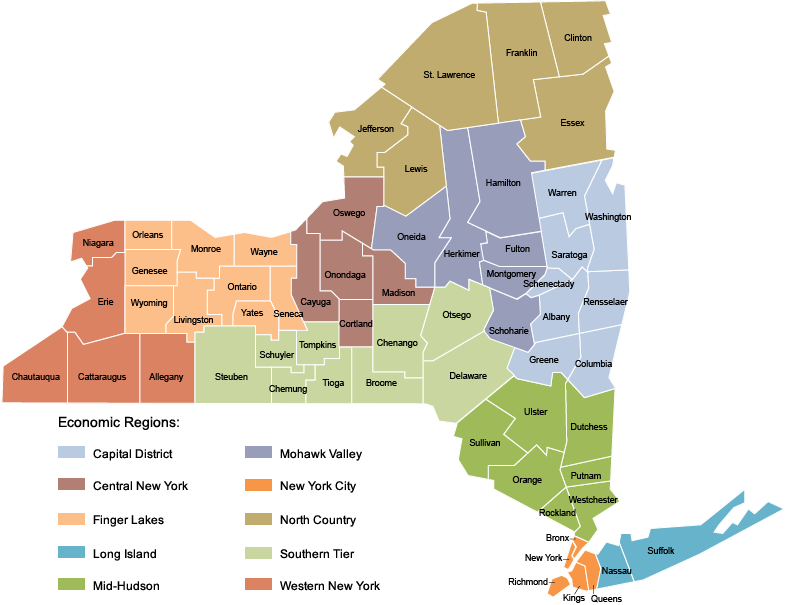
Regions Map
X
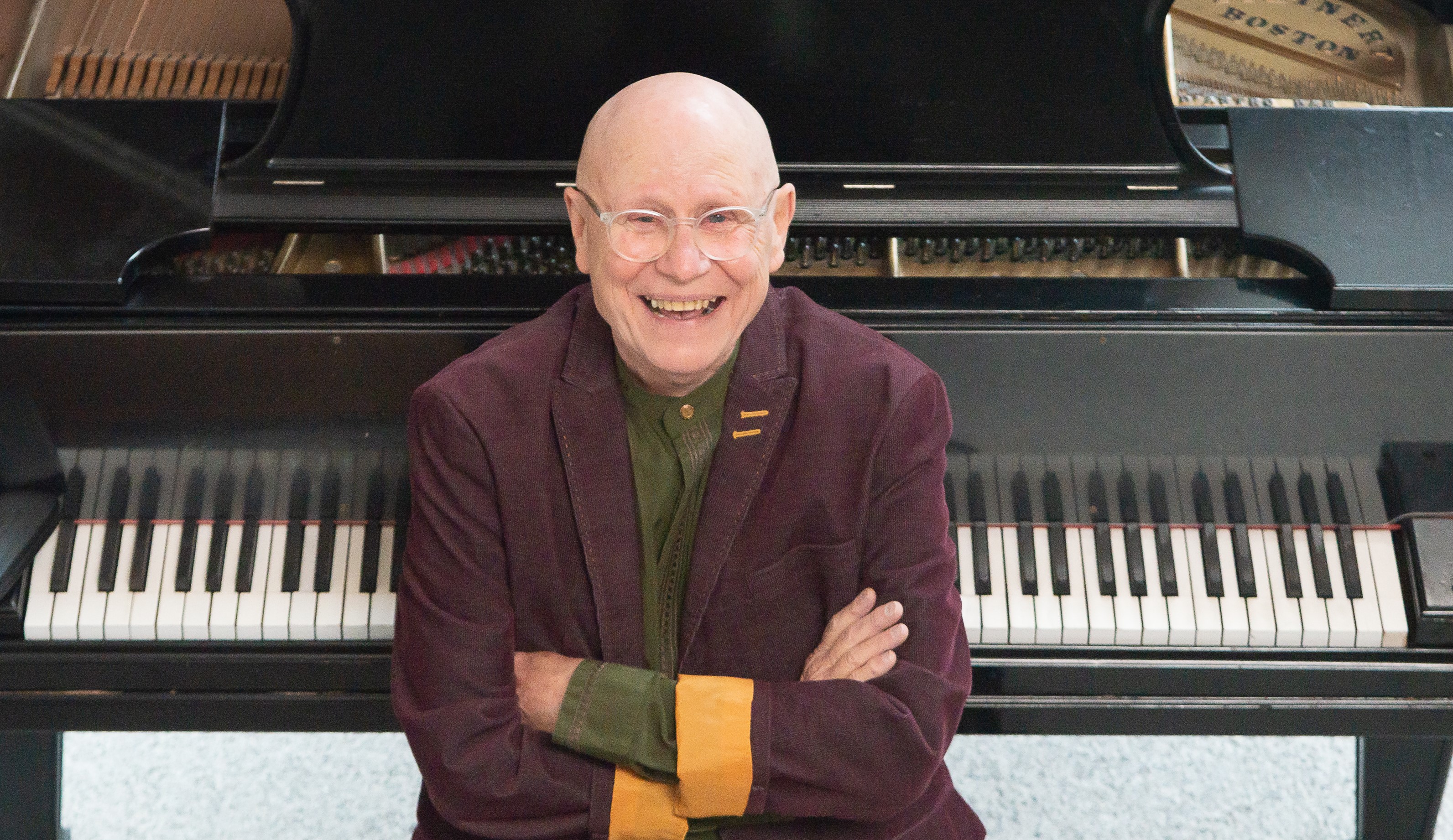
Justin Kolb
Middle/High School
Why Music Students Excel
Motivational Clinic for Band, Youth Orchestra and Chorus
(Also appropriate for Theatre Kids.)
Program Description
This morale and self-esteem building session begins with a ten minute solo performance by Justin. The performance is intentionally virtuosic, leaving no doubt in the student's mind that the artist is a seasoned professional who has experienced success on stage.
The objective of this learning experience for students is to reinforce what the music faculty has been stressing all along. That is: the student's musical experience and musical education goes well beyond 'blowing a horn'. This experience is about developing life survival skills. Skills that will help the students to become better adept at problem solving, decision making, enjoying a fulfilling life beginning now and into the future.
Justin asks the students to identify skills that they have learned from their musical experience (lessons, practice, or performance) that they have found useful when they are outside the world of music. Skills described by the students typically range from attention to detail and time management, to conflict resolution and ability to accept criticism. At the end of this segment of the session, a list sometimes comprising as many as 24 skills has been articulated by the students. Kolb looks at the students and asks them to seriously contemplate the "skills inventory". Kolb then exclaims, "Look at who you are and what you can do!" He quickly points out that large corporations and even governments invest great amounts of dollars to teach their employees how to acquire these same skills.These sessions are highly informational, uplifting, fun and enhance self esteem. Justin gets along easily with students, parents, staff, and faculty.Willing to tailor sessions to better meet the needs of the students.
Omegaman & Friends
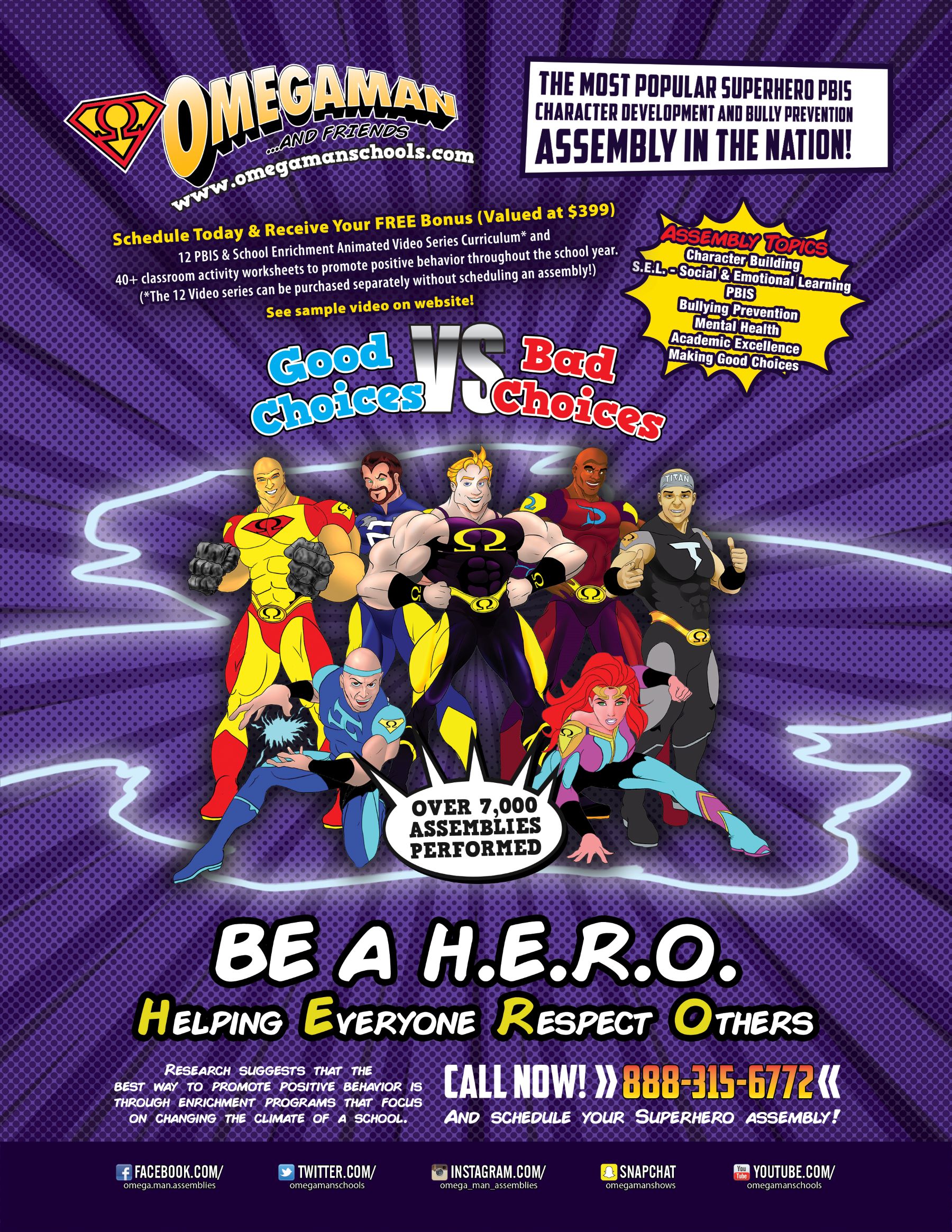
We are among America’s most sought-after school assembly speakers. The Omegaman & Friends presentation is a 45-60-minute interactive assembly with a SUPERHERO theme. It's filled with powerful visual illustrations, designed to promote good behavior by one of our SUPERHERO presenters. It’s hard for a speaker wearing a suit & tie to get most students’ attention nowadays. When a student sees one of our team members snap a baseball bat, rip a 400-page book in half, and bend steel in his teeth it grabs the student’s attention. The feats of strength are used as a tool to captivate and maintain the attention of the students, ensuring that the message is not lost. Each illustration is connected to an object lesson that will inspire your students to make the right choices when it comes to bullying, peer pressure and personal achievement. Research suggests that the best way to deal with issues that students are now facing is through comprehensive programs that focus on changing the climate of a school. Our presentation does exactly that! Our Mission: To promote positive Choices and move the student’s hearts and minds to contemplate positive change and new direction for their lives! Contact us TODAY for availability and a FREE quote.
My Daughters and Me MDAM, My Sons and Me MSAM
My Daughters and Me MDAM My Sons and Me MSAM is an innovative program designed to inspire self-expression and mental wellness in youth through various forms of art, mindfulness practices, and social-emotional learning. The MDAM MSAM INC offers a diverse range of Programs and creative activities including Ready-Set-Go, The Princess in Me, Master My Mind, Mingle and Munch, visual art, clothing design, dance/stepping, STEM, pad drumming, health and wellness, creative writing workshops, drama and empowerment workshops, all while fostering a positive and safe environment for self-expression and character building.
Elevate Your Students with Master My Mind (Grades 6-12)
Our progressive curriculum features flexible 1-hour lessons that integrate breathwork, mindfulness, movement, and expressive creative art activities with high-quality literature to establish a supportive learning environment, empowering mentorship that helps students cultivate resilience, self-regulation, and communication skills, ultimately leading to increased self-esteem, character development, workforce readiness skills, and confidence in students, resulting in happier, more engaged learners.
Art Expressions Project (grades PK-12): Our Art Expressions project program allows us to work with students across various grade levels, schools, and districts, fostering self-confidence, social cohesion, and effective communication. This program also enhances classroom, school, and community projects by incorporating creative arts, musical performances, and clothes design with simple stitching and art-filled spaces that showcase students' creativity. We offer a unique opportunity to create beautiful, elegant, and colorful spaces that students can be proud of.
The Princess in Me (Grades 3-5)
Unleash the Power of Princess Potential! Our program for girls focuses on building self-esteem, character development, anti bullying and vital life skills through expert guidance and engaging activities. We help young girls transform into confident, capable, and respectable individuals.
Mingle and Munch Lunch Buddy Program (Grades 4-8)
Introducing 'Mingle and Munch', your ultimate Lunch Buddy Program for girls that enhances the ordinary lunch break into an extraordinary experience. We understand that the lunch hour is more than just a break from classes. It's a chance for students to develop crucial life skills. Our program facilitates meaningful discussions, games, and self-expression among students, helping them grow and connect with their peers. Make the most of your midday reset with 'Mingle and Munch'!
Kelly de la Rocha
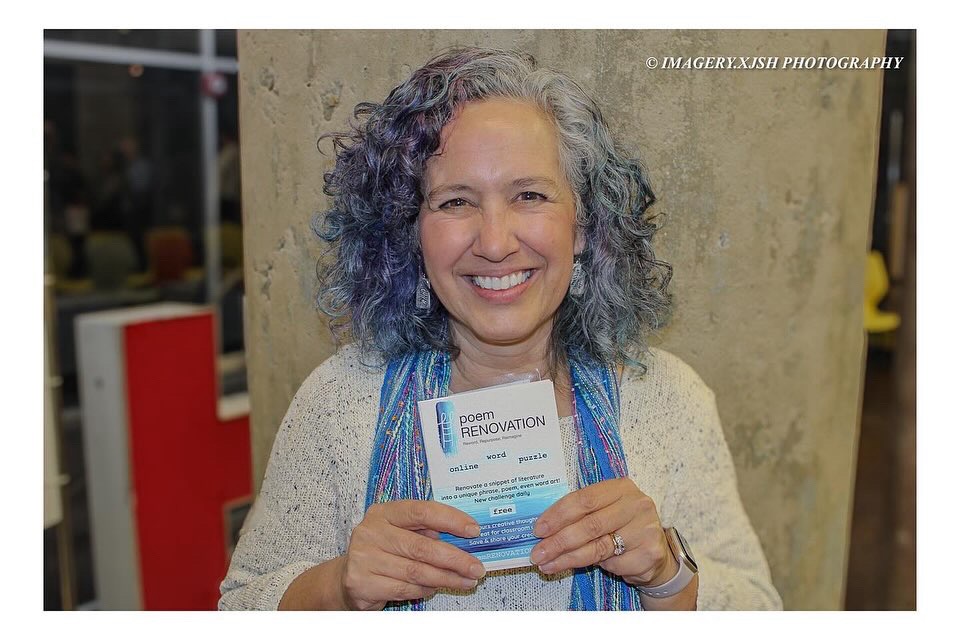
Kelly de la Rocha is a poet, journalist and founder of poem RENOVATION, a fun, web-based word challenge that promotes literacy, creativity and social-emotional learning. The software was a prize-winner at the 2024 Yale Innovation Summit.
Every day, poem RENOVATION presents users with a scrambled snippet of literature. They select words that resonate with them, then move them around on a digital canvas. The rules? There are none. The objective? To create.
During her lively, interactive workshops, Kelly details how poem RENOVATION came to be and how it works. Students have an opportunity to create a poem, phrase and/or word art on the site, share their creations, and receive positive feedback. Along the way, constructs including perspective, voice and figurative language are discussed.
Poem RENOVATION has been used by hundreds of students from New York to California and has become a favorite, ongoing activity in a number of classrooms.
Workshops:
*Are appropriate for middle and high school classes
*Can be personalized to include literature of the teacher’s choice
*Are offered in-person or via video call
WHAT EDUCATORS ARE SAYING:
“The level of confidence that I saw grow in my students was amazing, from not being willing to share to being willing to share, from sitting quietly and not saying much, to offering a compliment or asking a question to better understand one of their peers.” ~Teacher Valerie Wadsworth, O’Rourke Middle School, Burnt Hills, NY
They’re loving it! ~Teacher Renee Duran, Stone Valley Middle School, Alamo, CA
It empowered them and it brought them to a place where they wanted to share what they made and they love that their creation was never wrong. I think that was what really made the students feel so special and so willing.” ~Teacher Dena Marie de la Rocha, Gowana Middle School, Clifton Park, NY
“I immediately understood the impact it could have on public school children’s literacy and social-emotional development. ~Lauren B. Carpenter, Ed.M, Director of Education Programs, Albertus Magnus College, New Haven, CT
Empowered Educator

Empowered Educator provides professional development that supports the social and emotional well-being of the adults in schools. As arts teachers, you know that SEL is inherent in the work you do. However, the well-being of your program is dependent on the well-being of its educators. Empowered Educator programs give teachers practical strategies for stress relief, time management, energy efficiency, advocacy and emotional intelligence so you can make the massive impact you want to make for your students and your school communities. As a former music teacher, Jen Rafferty tailors Empowered Educator programming to be relevant, accessible, and meaningful for fine arts teachers.
DLW Storyteller
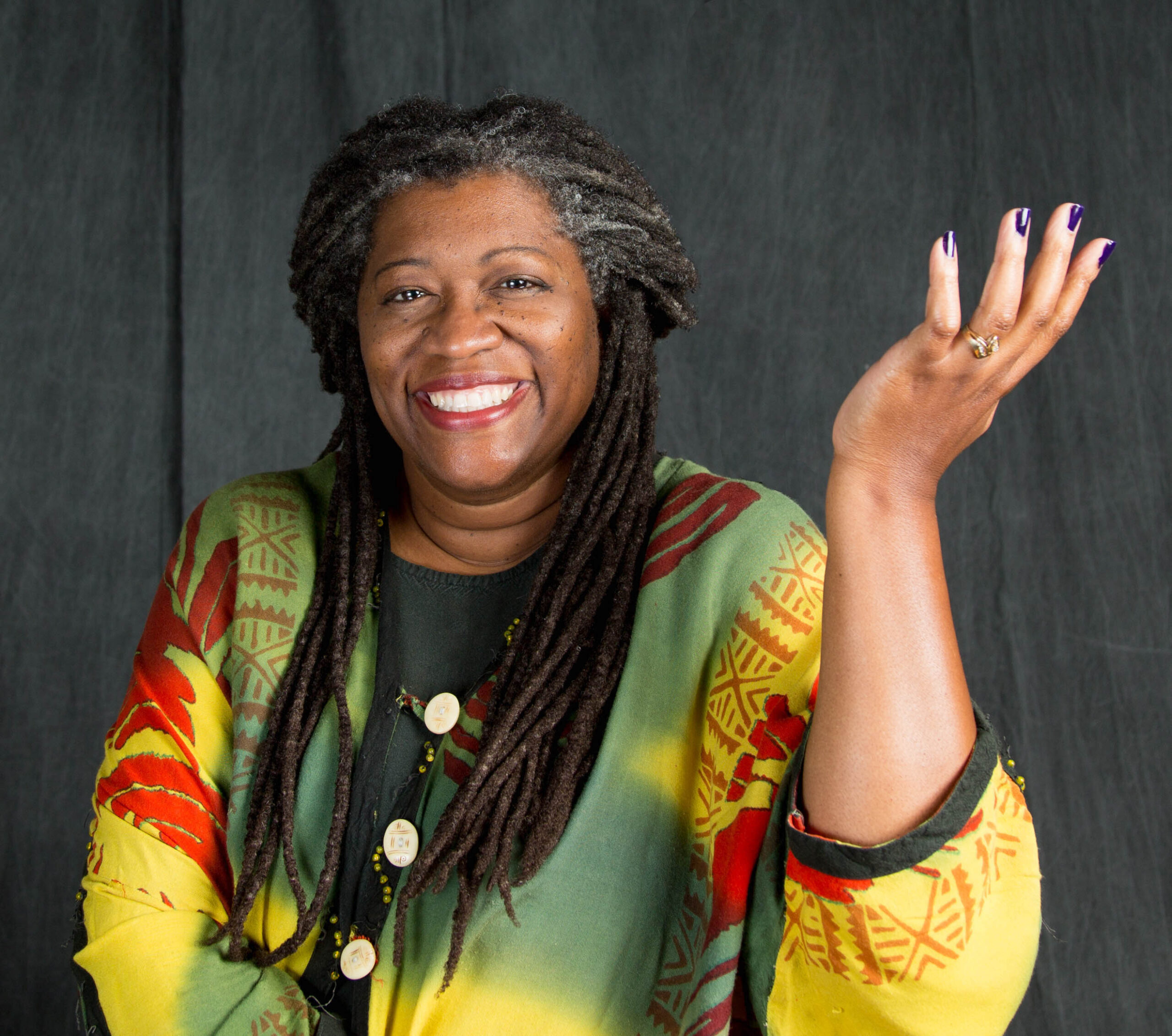
Telling multicultural folktales is an amazing way to introduce students to different cultures, learn story structure, boost vocabulary, and enhance pre-reading skills. Storytelling fosters imagination, creativity and is a great jumping off point for writing exercises, and discussions about elements of story from character motivations to rising action. Professional storyteller and author Donna Washington presents age-appropriate story sets to all of your students from Kindergarten to high school. There are perfect stories for all age groups from Anansi the Spider to Zeus! Donna uses dynamic language, energetic expressions and vocal pyrotechnics to bring these stories to life. So, strap yourself in for a wild, fun, entertaining, educational, interactive ride!
Use this link to view a video excerpt from this program: https://vimeo.com/442549489/80e27ea56c
Artist Background
Donna Washington is a professional author, storyteller, and multicultural folklorist who has been sharing stories for more than 36 years. Her amazing vocal pyrotechnics and dynamic physicality make her stories come alive and enthrall and delight audiences from four to one hundred and four. She offers a range of multicultural folktales, personal narratives and stories of her own creation. She is a multiple-award winning artist with eleven CDs and author of five children’s books. Her newest, PRAK FILLS THE HOUSE is available September 1st, 2023. She has been featured at numerous festivals, schools & libraries, theaters, and other venues around the world including Canada, Peru, Argentina, and Hong Kong. Her school shows are grade specific and targeted to students’ age, cognitive, and emotional development.
VRBuffalo
VRBuffalo is bringing spatial computing and immersive content creation to participants across WNY. By helping people have purposeful and thoughtful experiences with XR tech:
AR (Augmented Reality), MR (Mixed Reality), and VR (Virtual Reality) technologies.
WildWood Western New York
WildWood Western New York provides outreach programs focused on nature exploration. We offer both in-person and virtual programs for learners of all ages and abilities covering a wide range of topics including astronomy, biology, botany, ecology, geology, mycology, ornithology and more. We keep an up-to-date list of our current programs on our website, but we can also work with you to create a custom program that meets the needs of your students. In-person outreach programs feature both a presentation and activity component, and can be done indoors (in a classroom, library, etc.) or outdoors, if your school has the available greenspace. WildWood WNY's mission is to provide quality, accessible education through nature exploration to learners of all ages, abilities, and backgrounds, and we would love to work with you to bring your students closer to nature!
1000 Acres Ranch Resort
We offer a historically rich heritage of hosting guests of all ages, sharing the spirit of the wild Adirondacks for all who venture here. 1000 Acres Ranch was founded in 1942 by Jack and Ester Arehart. Located on the banks of the Hudson River, in the heart of the Adirondack Park, the ranch offers guests the opportunity to immerse themselves in the beauty of the Adirondacks while having a true dude ranch experience. Over the decades, the ranch gained the reputation of being “The Cadillac of Ranches” and “The Pearl of The Adirondacks.” We pride ourselves on upholding that reputation to this day. Delight in the beauty of the Adirondacks and experience trails the way they did in the wild west - on horseback. For almost a century 1000 Acres Ranch has offered guests an Adirondack experience not found anywhere else. Get a taste of the rugged cowboy life – but with a few more of the modern amenities and activities.
Super Stories
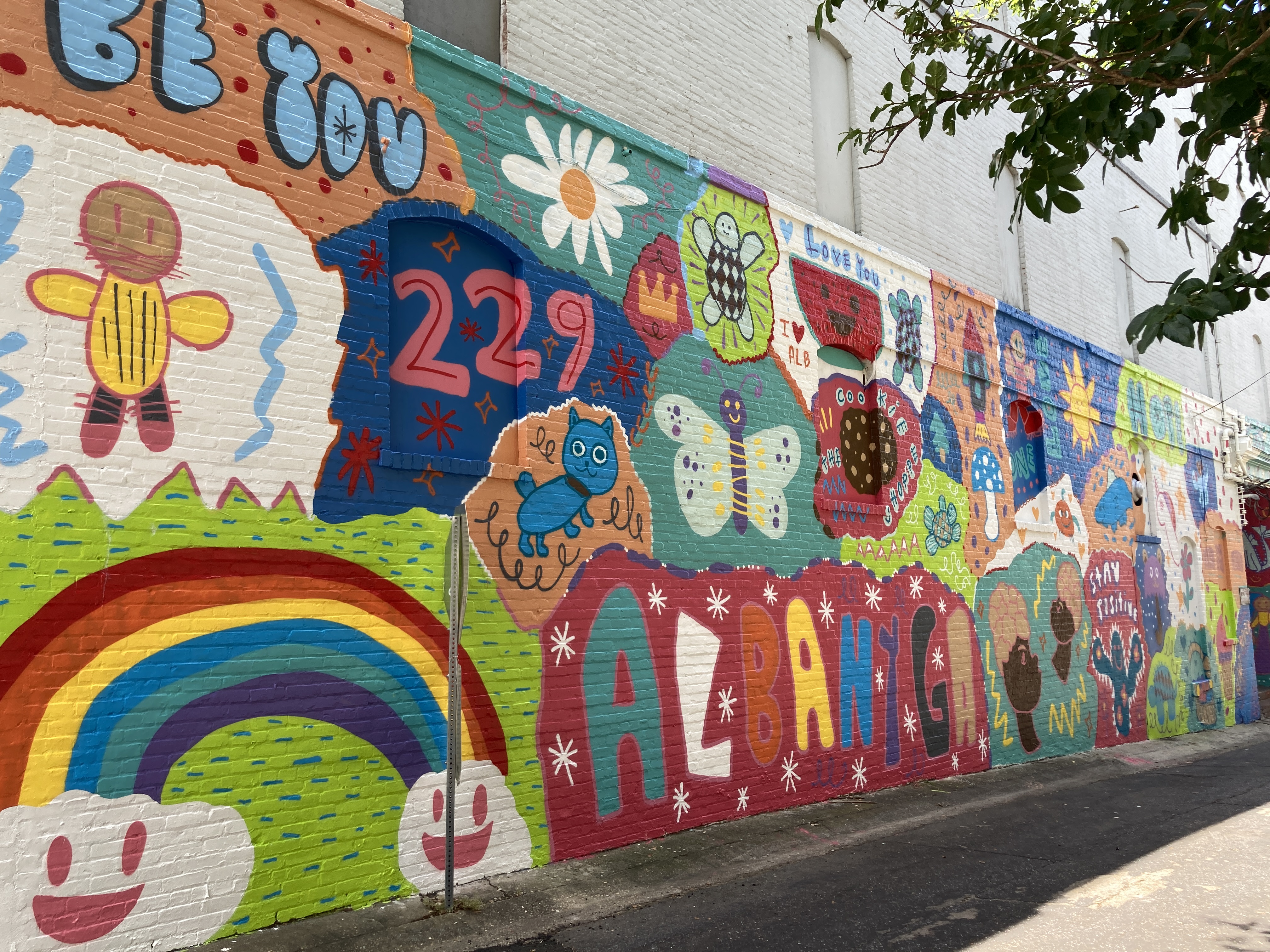
We offer a one of a kind school mural program where the students are centered in the work and entire process from brainstorming to final painting. Our mural process involves a brainstorming session where we have the students drawing and coming up with ideas that touch on the theme that is chosen by their school. We then take those drawings and create a digital sketch using the actual drawings from the students. We involve every student from the school in the painting process so that they are able to have ownership and a hand in the creative process. Our unique approach creates a sense of joy and excitement for all participating students and staff as we are able to transform these hallways into large colorful pieces of public art that have an authentic student look and feel to them. We make sure that the final outcome looks professional and clean while still elevating student work from the paper to the wall. We have painted with over 7000 students in the past 2 years creating about 25 murals!
We also offer a variety of arts based hands on workshops crafted for all age groups like mask making, printmaking, paper pulp sculptures, paper mache and much more!
Ithaca Children's Garden
Ithaca Children’s Garden (ICG) offers hands-on, play- and nature-based learning opportunities that support curiosity, creativity, and environmental understanding. Programs include Pop-Up Play Days — playworker-led experiences using open-ended “loose parts” that spark imagination and child-directed exploration — hosted at schools or at ICG, as well as educator-guided field trips to our 3-acre Garden where students explore plants, habitats, and the rhythms of the seasons. ICG also brings learning directly into classrooms through interactive lessons on insects, gardening, food systems, and more that complement classroom curriculum through personalized, sensory-rich experiences.
Ten80 Education
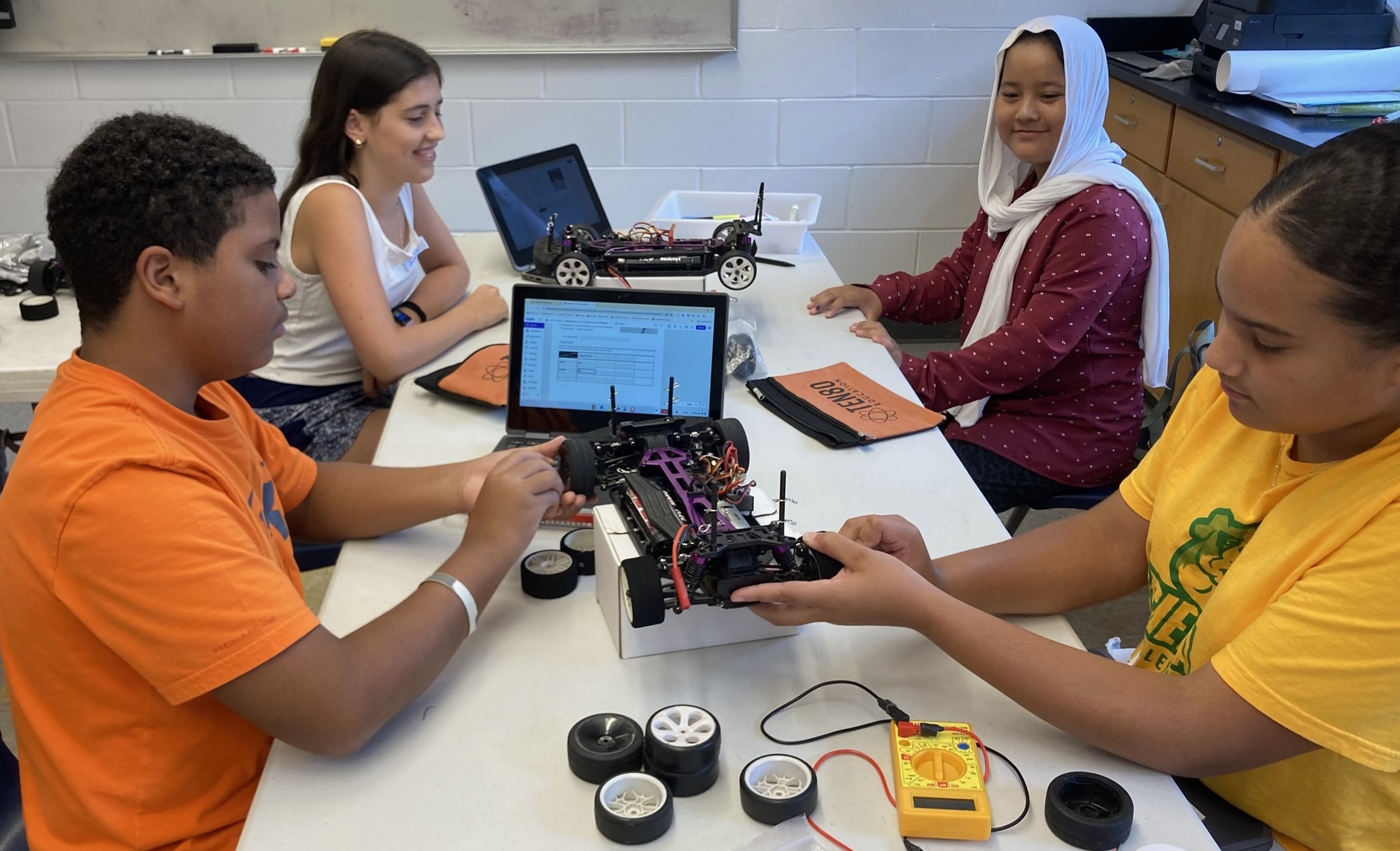
Ten80 offers high-energy programs that use dynamic technology and hands-on experiences to inspire students about careers, STEM pathways, the trades, and leadership skills.
The most popular program engages a large audience in team-based challenges and culminates in a race using scale-model electric vehicles. Other options include classroom workshops, afterschool explorations, and professional development. All Ten80 programs include the "Ten80 T-Square" pillars of Tech (such as drones, autonomous vehicles, and renewable energies), Tools (from measuring tapes to spreadsheets to digital calipers!), Teamwork, and Tenacity.
Ten80 has delivered programs all over the U.S and in China, and specializes in creating the “aha” moments that break down barriers so that every student can imagine a wider range of future opportunities.